
At a time when global geopolitics is being reshaped by economic nationalism, technology rivalry, and shifting alliances, the United States has sent a clear and deliberate message: India occupies a uniquely central place in American strategic thinking.
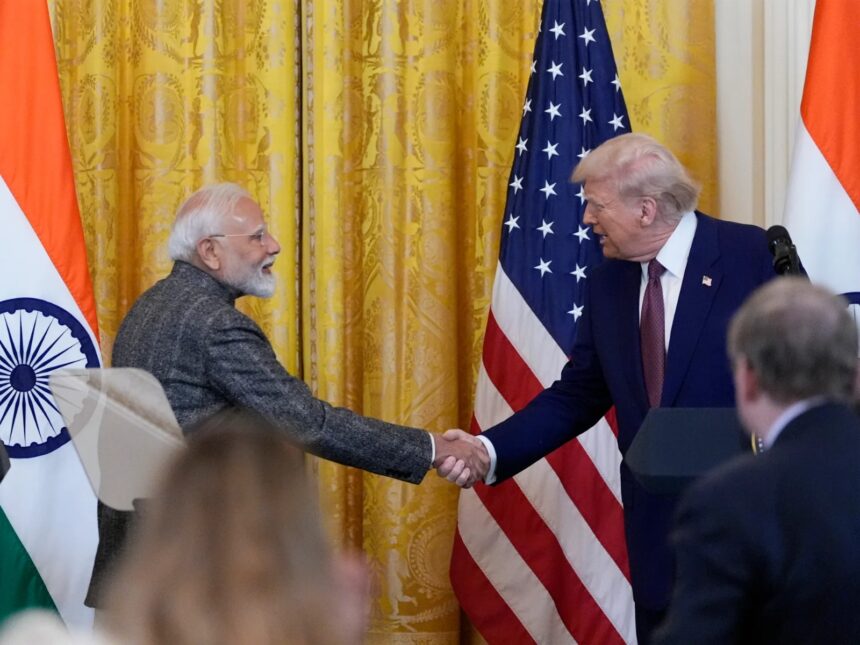
Speaking at the US Embassy in New Delhi, a senior American official, Gor, indicated that former US President Donald Trump may visit India next year, while underlining that “no country is more essential than India” for the United States. The remark was not casual diplomacy—it was a strategic signal.
A Relationship Beyond Transactional Politics
The official emphasised that the friendship between Trump and Narendra Modi is “real,” adding that real friends can resolve their differences. In diplomatic language, this is significant. It suggests that despite disagreements on trade, tariffs, immigration, or geopolitical postures, the relationship has moved beyond narrow, transactional exchanges.
For India, this reinforces a long-standing ambition: to be seen not merely as a regional power, but as a systemically important global partner.
Why India Matters More Than Ever to the US
From Washington’s perspective, India today checks multiple strategic boxes:
- Economic Scale: India is one of the fastest-growing large economies, offering long-term market depth for US companies amid slowing growth in the West.
- Geopolitical Balance: In a world increasingly defined by US–China competition, India acts as a stabilising counterweight in the Indo-Pacific.
- Technology & Supply Chains: As companies seek alternatives to China-centric supply chains, India’s role in manufacturing, semiconductors, and digital services is rising
- Democratic Alignment: Despite differences in governance style, India remains a democratic partner in a fragmented global order.
Calling India “essential” is, therefore, not rhetoric—it is strategic necessity.
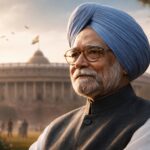

The Trump Factor: Symbolism and Strategy
A potential Trump visit, if it materialises, would be loaded with symbolism. During his presidency, Trump invested heavily in personal diplomacy, and India was a key beneficiary—most notably during large-scale public events and high-visibility bilateral engagements.
For India, such a visit would:
- Reaffirm continuity in ties regardless of political changes in Washington
- Strengthen India’s leverage in trade and defence negotiations
- Signal confidence to global investors watching US–India relations closely
From a business and economic standpoint, political warmth often precedes commercial momentum.
Managing Differences Without Derailing the Partnership
The US official’s remark that “real friends can resolve their differences” is equally important. It acknowledges existing frictions—trade disputes, regulatory concerns, visa policies—but frames them as manageable, not existential.



This reflects a maturing relationship: one where disagreements are absorbed within a broader strategic framework, rather than allowed to dominate it.
The Bigger Picture for India
For New Delhi, such statements validate years of strategic balancing—maintaining autonomy while deepening ties with the US. For Indian businesses and policymakers, the message is clear: India’s global relevance is no longer emerging; it is established.
As the world navigates uncertainty in 2026 and beyond, India–US ties are likely to remain one of the most consequential bilateral relationships shaping global economics, security, and technology.
Whether or not the visit happens, Washington’s assertion signals that India is no longer optional in global strategy—it is indispensable. GBN