




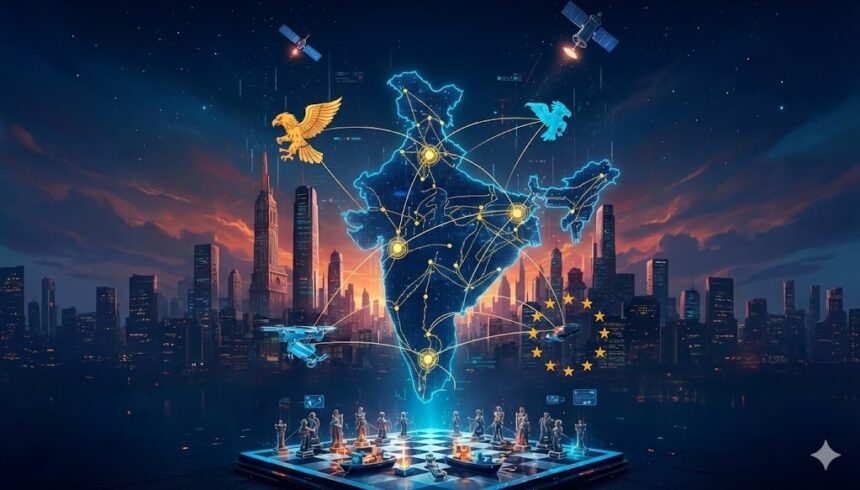
As 2025 concludes, India is poised for significant economic gains contingent on securing pivotal trade agreements with major global economies, particularly the United States and the European Union. These efforts are central to India’s ambition of achieving a 2 trillion export economy by 2030. Beyond economic metrics, these negotiations are about expanding global influence, building resilient economic structures, and establishing India as a key player in a reshaped world order, transitioning from a regional power to a global shaper.
India’s Economic Evolution
Following independence, India adopted a model of self-reliance and import substitution within a socialist-leaning economy. A paradigm shift occurred in 1991 with economic liberalization, which opened the doors to international trade and investment, laying the groundwork for current trade relationships. The Indo-US relationship evolved significantly from the Cold War era to a strategic partnership, marked by milestones like the Civil Nuclear Deal and informal exchanges like the “mangoes-for-motorcycles” pact.
India’s Trade Strategy in 2025
India’s trade strategy in 2025 focuses on more than just export volume. The Foreign Trade Policy 2023 emphasizes streamlining operations, digitalization to reduce bureaucratic hurdles, and transitioning from outdated incentive schemes to modern remission models like RoDTEP for efficiency and transparency. The “Team India” approach unifies states, districts, and international missions to propel exports, recognizing trade as a collective endeavor.
Key focus areas include high-growth sectors like e-commerce, digital trade, and sustainable exports, with India integrating environmental responsibility into its trade policies to capitalize on the green economy. Initiatives like ‘Atma Nirbhar Bharat’ and ‘Make in India 2.0’ aim to bolster domestic manufacturing, reduce import reliance, diversify the export basket, and foster a self-reliant yet globally integrated economy. India navigates the geopolitical landscape by balancing strategic autonomy with diversified trade partners and managing global pressures to pursue national interests as an engaged global player.


US-India Trade Relations
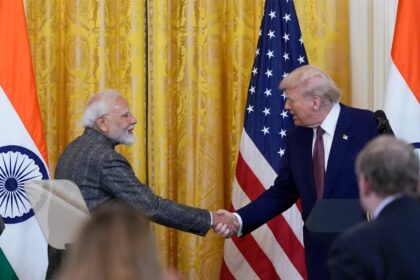
A primary objective is to nearly triple bilateral trade to $500 billion by 2030. In December 2025, US trade negotiators are in India, aiming for a breakthrough on a long-awaited trade agreement. US farmers seek increased market access for agricultural produce, while India desires reduced tariffs on its labor-intensive goods.
The US imposed tariffs of up to 50% on Indian goods in August 2025, partly due to India’s continued oil imports from Russia, which India considers “unfair.” In response, India has increased energy imports from the US and signaled openness to its nuclear sector. Optimism exists for a framework agreement by year-end, potentially deferring more contentious issues.



EU-India Trade Relations
The EU-India relationship, dating back to early EEC ties in 1962, has evolved into a ‘Strategic Partnership.’ Post-Brexit, India renewed its focus on a direct, comprehensive trade deal with the EU. A rough outline is in place, with potential announcements around India’s Republic Day in January. Discussions cover 23 policy areas.
- Carbon Border Adjustment Mechanism (CBAM): India criticizes it as a “disguised tariff” potentially impacting developing economies.
- Market Access: The EU seeks tariff reductions on automobiles, wines, and medical devices, while India aims for enhanced mobility for its professionals and protection for sensitive sectors.
- Intellectual Property Rights and Investment Protection: Ongoing debates complicate negotiations.
Beyond the EU, India recently operationalized an FTA with the EFTA bloc, including a $100 billion investment pledge, demonstrating a commitment to diversifying trade relationships.
Future Outlook for India’s Trade Ambitions
The path forward involves sustained high-level dialogues and strategic partnerships with the US and EU. Collaboration in cutting-edge technologies like AI, quantum computing, semiconductors, and green tech will be crucial, exemplified by the US-India “TRUST” initiative for secure supply chains.
India aims to become a global manufacturing hub, using schemes like PLI to diversify supply chains away from other regions and enhance economic resilience. India seeks to balance strategic autonomy (e.g., maintaining ties with Russia) with strengthening trade relations in a fragmented world. Economists predict successful trade deals will significantly boost India’s investment climate and global standing, acting as a “game changer” for its economy.


India’s 2025 trade narrative is characterized by ambition, promising negotiations, and significant geopolitical considerations, reflecting a balance between strategic autonomy and global economic integration. This pursuit aligns with a global trend towards diversified supply chains and new economic alliances for enhanced resilience. The coming months are critical for India to secure these key deals and advance towards its $2 trillion export goal, with outcomes poised to impact the global economic landscape. GBN