






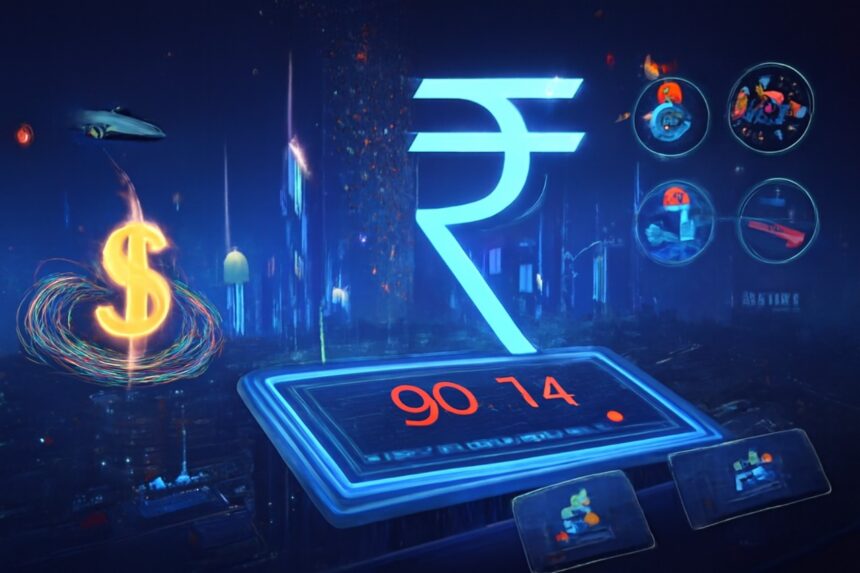
The Big Headline: Rupee’s Tumble to 90!
Whoa, What Happened? The Indian Rupee’s audacious dance with gravity has taken it to a new low, breaching the 90 mark against the US Dollar (a rather precise 90.14, as of this morning, December 3, 2025). It’s a symbolic descent, laden with implications that extend far beyond the foreign exchange ticker.
Quick Stats: The weakening isn’t a sudden tremor; it’s a sustained erosion. A 0.85% dip last week, a further 1.56% slide over the past month, culminating in a substantial 6.38% depreciation over the year. The Dollar isn’t the sole object of the Rupee’s affection; it’s softened against the Euro, the Pound, and even the Yen, painting a broad picture of relative weakness.
Why Should I Care? Abstract figures transform into tangible realities when the Rupee falters. This isn’t merely an economist’s playground; it’s a force shaping the cost of your next vacation, influencing the price of everyday goods, and potentially altering the trajectory of the national economy. Let’s unravel this thread.
Why Is This Happening? The Root Causes
It’s a Mix of Global and Local Drama! Attributing blame to a singular culprit is a futile exercise. The Rupee’s decline is a confluence of pressures, a delicate interplay between international currents and domestic vulnerabilities.


A. Global Heavyweights:
- The Mighty Dollar: The US Federal Reserve’s hawkish stance, raising interest rates with unwavering resolve, has magnetized capital towards dollar-denominated assets, creating a vacuum that siphons funds from emerging economies, including India.
- Geopolitical Jitters: The world stage is riddled with conflicts and rivalries, from the ongoing Russia-Ukraine conflict to the simmering tensions between the US and China. These uncertainties fuel a “flight to safety,” with investors seeking refuge in the perceived stability of currencies like the dollar.
- Oil Shockwaves: India’s insatiable appetite for crude oil makes it particularly vulnerable to fluctuations in global oil prices. As prices surge, the demand for dollars to finance these imports intensifies, placing downward pressure on the Rupee.
- Foreign Investors Fleeing: Risk aversion is a contagious sentiment in financial markets. As global uncertainty mounts, foreign portfolio investors are pulling capital from Indian equities and bonds, further exacerbating the Rupee’s woes.
- The Elusive US Trade Deal: The protracted and frustratingly slow progress on a comprehensive trade agreement with the United States is a persistent source of market unease. Coupled with existing US tariffs on Indian exports, it adds another layer of complexity to the Rupee’s predicament.
B. Homegrown Headaches :
- The Big Spending Habit (Trade Deficit): India’s imports consistently outstrip its exports, creating a chronic trade deficit that necessitates a substantial outflow of foreign currency. These deficits have reached worrying proportions, amplifying the demand for dollars.
- Current Account Crunch: This is the broader measure of India’s transactions with the rest of the world. A persistent current account deficit signifies that India is spending more abroad than it is earning, leading to a net outflow of capital.
- Importers Always Want Dollars: Indian businesses, reliant on imported goods and raw materials, are perpetual consumers of dollars, maintaining constant pressure on the Rupee’s exchange rate.
- Gold Fever: India’s cultural affinity for gold translates into significant imports. Rising gold prices exacerbate the trade deficit, as the cost of these imports swells.
A Look Back: Rupee’s Rollercoaster Through History
Not Our First Rodeo: The Rupee’s journey has been punctuated by periods of turbulence and resilience.
- The 1966 Shock: The Rupee underwent a drastic 57% devaluation in response to a confluence of crises – war, drought, and economic distress. The public outcry was understandable.
- The 1991 Crisis: Another significant devaluation (18-19%) was a painful but necessary step in the sweeping economic reforms that liberalized the Indian economy. It was a bitter pill that ultimately paved the way for future growth.
- Recent Wobbles: The “Taper Tantrum” of 2013 and the currency slide of 2018 serve as reminders of the recurring vulnerabilities of the Rupee to both global and domestic pressures, underlining the cyclical nature of currency fluctuations.
The Ripple Effect: How This Hits Your Pocket and Businesses
A. What Gets More Expensive?:
- Inflation Alert! Prepare for a broader inflationary impact. A weaker Rupee makes imports pricier (oil, electronics, and vital raw materials), with these costs trickling down to consumers. A rough estimate suggests a 30-35 basis point rise in inflation for every 5% depreciation of the Rupee.
- Imported Goods: From the latest smartphones to overseas travel and international education, the price tags on imported goods and services will inevitably inflate. Even essential items like cooking oil and fertilizers will feel the pinch.
- Foreign Debt Burden: Indian companies (and the government) with dollar-denominated debt will find themselves needing more Rupees to service their obligations, placing a strain on their balance sheets.
B. Any Silver Linings? :
- Export Boost (Maybe?): In theory, a weaker Rupee makes Indian goods more competitive on the international market, potentially stimulating exports.
- IT Sector Cheers: The IT sector, which earns a significant portion of its revenue in dollars, stands to benefit as they receive more Rupees for every dollar earned.
- Manufacturing’s Mixed Bag: Manufacturers who source their inputs locally may find their exports more competitive. However, those reliant on imported components will face increased costs.
The Great Debate: What Are People Saying?
- Government’s Spin: Finance Minister Nirmala Sitharaman maintains that the Rupee’s exchange rate is “market-determined” and that it supports exports, framing the situation as dollar strengthening rather than Rupee weakening. The political rhetoric is predictable.
- Economists Weigh In:
- Some economists anticipate continued moderate weakness, advocating for a “competitive exchange rate” to bolster exports.
- Others express cautious optimism, hoping that a breakthrough in the US trade deal could trigger a Rupee rally.
- There’s also ongoing debate about whether the Rupee is genuinely “undervalued” and whether the current period of low inflation is merely a temporary lull before a potential storm.
- The RBI’s High-Wire Act:
- The Reserve Bank of India (RBI) is actively intervening in the foreign exchange market, selling dollars to curb excessive volatility and defend psychologically important levels like 90. They are attempting to maintain order in the face of market pressures.
- Interest Rate Dilemma: The RBI faces a complex policy choice: cut interest rates to stimulate economic growth or maintain them to combat inflation and currency depreciation? The consensus is that they will likely hold steady at 5.5% for now.
- Liquidity Management: The RBI is also actively managing liquidity in the banking system, sometimes draining excess liquidity and at other times injecting trillions of Rupees to maintain stability.
- The Elephant in the Room: The persistent delay in the India-US trade deal remains a significant source of market frustration, casting a long shadow over investor sentiment.
Crystal Ball Gazing: What’s Next for the Rupee?
- Near-Term (End of 2025): Expect continued volatility, with the Rupee likely to remain in the 88-90 range, perhaps even testing 90.82. The turbulence is unlikely to subside quickly.
- Medium-Term (2026): A gradual weakening trend is generally anticipated, with the Rupee hovering around 90. However, some analysts bravely predict a strengthening towards 88 or even 83 – a scenario many are hoping for.
- Long-Term (2026-2030): Most projections point to a continued slow depreciation, potentially ranging from 90 to 102. Yet, some long-term optimists highlight India’s strong economic fundamentals and the potential inclusion in global bond indices as factors that could lead to a stronger Rupee in the long run.
- What to Watch For:
- RBI’s Next Move: Their interventions in the foreign exchange market and their interest rate decisions will be critical.
- Global Economy: Shifts in US monetary policy or a reduction in geopolitical tensions could alleviate pressure on the Rupee.
- Trade Deal Breakthrough: A finalization of the US-India trade agreement could act as a major positive catalyst.
- Oil Prices & Investment: Stable crude oil prices and a resurgence in foreign investment flows would provide much-needed relief.
- The Bottom Line: The RBI will continue to strive for stability, but it is unlikely to target a fixed exchange rate. India’s economic growth remains a fundamental strength, but the Rupee’s trajectory will depend on navigating the complex interplay between domestic strengths and global headwinds.
Navigating the New Normal
Keep a close watch on the headlines – the Rupee’s story is far from over!



The Rupee’s fall to 90 against the dollar serves as a powerful reminder of the intricate connections between global and domestic economies.
While challenges such as inflation and higher import costs loom, the resilience of the Indian economy and the strategic interventions of the RBI will be crucial in navigating these turbulent currency waters. GBN