





Introduction: The Indian Rupee’s Decline
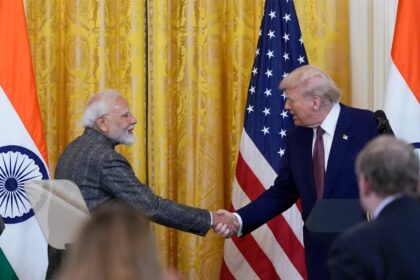
The Indian Rupee has depreciated by 6% against the US Dollar in the current year, largely attributed to the strained trade relationship between India and the United States, particularly under the Trump administration. This tension is characterized by tariffs and the revocation of preferential trade status, contributing to a challenging economic climate for the Rupee.
- Introduction: The Indian Rupee’s Decline
- Historical Context: Pre-Trump Era
- Trump Administration’s First Term (2017-2021): “America First” and Trade Tussles
- Renewed Tensions (2025): Intensified Trade Storm and Rupee’s Deep Freeze
- Underlying Reasons for Stalemate
- Signs of Hope and Resilience
- Outlook for the Indian Rupee
- Broader Strategic Alliance
- A Complex and Evolving Partnership
Historical Context: Pre-Trump Era
Following India’s independence in 1947, relations were influenced by the Cold War, but economic engagement significantly grew in the 1990s. Key milestones included the civilian nuclear cooperation agreement, burgeoning defense ties, and regular high-level economic dialogues. The Obama administration designated India as a “Major Defense Partner.” Despite this, the US previously expressed concerns about India’s tariffs and market access barriers in sectors like textiles, pharmaceuticals, and automobiles, while India aimed to boost exports. These were considered minor disagreements prior to the escalation of trade disputes.
Trump Administration’s First Term (2017-2021): “America First” and Trade Tussles
The first Trump presidency introduced an assertive trade policy focused on “America First” and addressing global trade imbalances.
- Tariff Imposition: In 2018, the US imposed tariffs on steel and aluminum, prompting retaliatory tariffs from India on US exports such as almonds and walnuts.
- GSP Revocation: In 2019, India’s Generalized System of Preferences (GSP) status was revoked, eliminating duty-free access for approximately $5.6 billion worth of Indian goods. The US cited India’s alleged failure to provide “equitable and reasonable market access.”
- Specific Grievances: Trump publicly criticized India’s high tariffs, mentioning brands like Harley-Davidson. Market access for US agricultural products and medical devices, along with India’s data localization policies, were also contentious issues.
- Outcome: This period saw increased trade tensions. Despite negotiations, a comprehensive trade agreement was not reached. However, strategic cooperation, particularly in defense, continued, indicating a compartmentalization of interests.
Renewed Tensions (2025): Intensified Trade Storm and Rupee’s Deep Freeze
As of December 2025, a renewed Trump administration has intensified trade tensions.


- Escalated Tariffs: In August 2025, the US imposed a 50% tariff on Indian exports, a significant increase from earlier 25% tariffs.
- US Rationale: This aggressive stance is reportedly a response to India’s continued importation of Russian oil and perceived protectionist trade policies. India has protested these tariffs as “unfair, unjustified, and unreasonable” and defended its right to an independent energy policy.
- Rupee’s Performance: The climate of uncertainty has caused the Indian Rupee to weaken significantly, making it the weakest currency in Asia and one of the worst global performers in 2025, repeatedly breaching the 91 rupees per dollar mark.
- Contributing Factors to Rupee’s Woes: The Rupee’s decline is attributed to a widening trade deficit, punitive US tariffs, and substantial outflows of foreign portfolio investment (FPIs).
Underlying Reasons for Stalemate
- Market Access Demands vs. Indian Protections: The US seeks greater market access for agricultural products like almonds, corn, and apples. India, however, remains protective of its politically sensitive agricultural and dairy sectors, which have significant social and political implications.
- “Make in India” vs. US Trade Demands: India’s focus on domestic manufacturing through initiatives like “Make in India” and “Atmanirbhar Bharat” is viewed by the US as an obstacle to free trade.
- Strategic Autonomy: India’s commitment to strategic autonomy, exemplified by its energy ties with Russia, adds complexity to negotiations.
Signs of Hope and Resilience
- Export Growth: In November 2025, India’s exports to the US increased by 22%, even with the 50% tariffs. This suggests Indian exporters are absorbing costs or focusing on tariff-exempt goods like electronics and pharmaceuticals.
- Negotiation Progress: High-level negotiations are actively progressing. As of December 2025, Indian officials report significant progress, with most trade differences addressed and a comprehensive trade framework agreement potentially finalized by March 2026. The US has acknowledged India’s “forward-leaning proposals.”
- Ambitious Trade Targets: Both nations aim to achieve $500 billion in bilateral trade by 2030, a substantial increase from the $212.3 billion recorded in 2024.
Outlook for the Indian Rupee
- Near-Term: The Rupee is expected to remain under pressure in Q4 2025-2026, fluctuating around 90-91 per dollar due to foreign investment outflows and dollar demand.
- Long-Term: Gradual depreciation against the dollar is anticipated between 2026-2030, potentially reaching 90-102 INR per USD, influenced by global economic trends.
- RBI Interventions: The Reserve Bank of India (RBI) is intervening in forex markets, managing inflation, and cutting interest rates to stabilize the currency and stimulate growth. A trade deal is considered crucial for sustained Rupee recovery.
- Economic Strength: India’s economy is a global growth leader, with robust domestic demand and optimistic GDP forecasts (7.3% for FY 2025-26), providing a strong foundation for the Rupee.
- Strategic Reforms: India is pursuing Rupee internationalization and structural reforms. A successful trade agreement could boost India’s GDP by 0.5%.
Broader Strategic Alliance
The US-India relationship extends beyond trade, encompassing a broader strategic partnership, particularly in the Indo-Pacific region, and serving as a counterweight to China’s influence. Future collaboration is expected in technology (semiconductors, digital governance), clean energy, supply chain diversification, and defense. India is positioning itself as a key alternative manufacturing hub.
A Complex and Evolving Partnership
The US-India trade relationship is dynamic and complex. While recent trade tensions have impacted the Rupee, ongoing negotiations, India’s export resilience, and strategic alignment indicate a commitment to finding common ground. The outcome of these trade talks will significantly influence bilateral trade, global economic dynamics, and geopolitical partnerships. GBN