


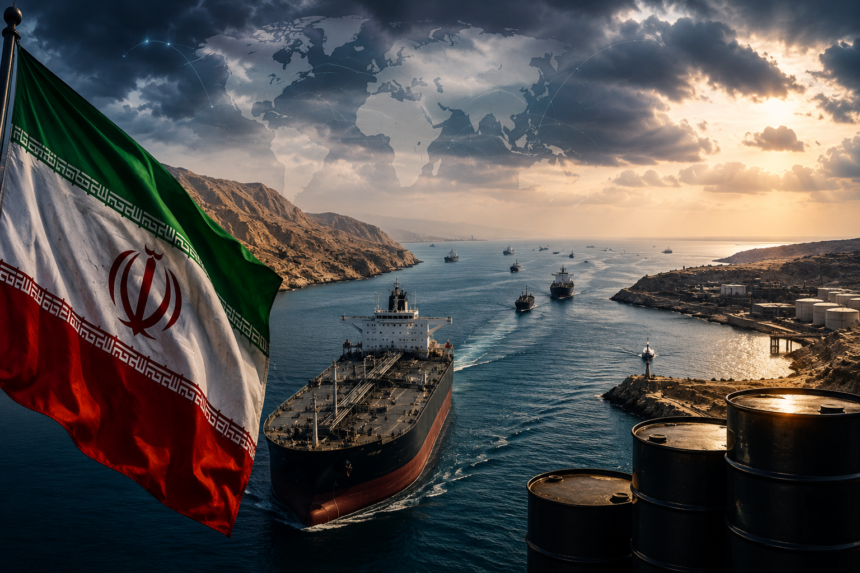
For decades, the global economy operated on one key assumption: despite tensions, the Strait of Hormuz would remain open. That assumption is now being challenged.
A recent geopolitical analysis suggests Iran is no longer trying simply to “close” Hormuz during conflicts. Instead, Tehran appears to be building long-term influence and economic leverage over one of the world’s most critical energy corridors.
Why Hormuz Matters
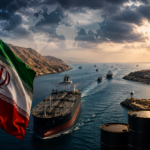
The Strait of Hormuz handles nearly 20% of the world’s daily oil consumption and close to one-third of global LNG trade. On average, 17–20 million barrels of oil pass through the strait every day, making it the world’s most important energy chokepoint.
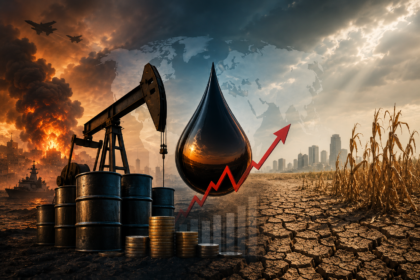
When tensions escalated in early 2026 after military strikes involving Iran, Israel, and the United States, global markets reacted instantly. Brent crude prices briefly crossed $120 per barrel, shipping insurance premiums surged by over 60%, and LNG spot prices in Asia jumped sharply within weeks.



The disruption exposed how dependent the global economy still is on a narrow maritime corridor barely 50 km wide at its narrowest point.
Iran’s New Strategy
Traditionally, analysts feared a military blockade of Hormuz. But Iran’s newer strategy appears more institutional than military.



Reports suggest Tehran introduced systems involving vessel registration, routing permissions, and transit-related charges for ships moving through the strait. According to estimates cited in the analysis, a fully operational Iranian transit regime could potentially generate $70–90 billion annually.
This changes the geopolitical equation. A military blockade can trigger direct confrontation, but an administrative framework creates a slower, more complex challenge. Over time, repeated usage by shipping firms and insurers can gradually normalize such systems.
In global trade, practice often creates legitimacy.
Can Pipelines Replace Hormuz?
Gulf nations have accelerated investments in bypass pipelines to reduce dependence on Hormuz. Saudi Arabia’s East-West pipeline currently has a capacity of roughly 5 million barrels per day, while the UAE’s Abu Dhabi Crude Oil Pipeline can transport around 1.5 million barrels daily.



But the numbers reveal the limitation. Even combined, alternative pipelines handle far less than the normal 17–20 million barrels flowing through Hormuz each day.
LNG exports face an even bigger challenge. Qatar, one of the world’s largest LNG exporters, remains heavily dependent on maritime access through the strait. The 2026 crisis reportedly disrupted around 17% of Qatar’s LNG export capacity, creating ripple effects across Europe and Asia.
This means Hormuz will continue to hold enormous strategic value regardless of pipeline expansion.
China’s Pragmatic Response
China, the world’s largest crude importer, receives nearly half of its oil imports through routes connected to Hormuz. Rather than wait for geopolitical consensus, Beijing has focused on ensuring uninterrupted energy flow while simultaneously accelerating overland pipeline projects from Russia and Central Asia.
This reflects a broader shift in global economics: countries are no longer assuming permanent stability. Instead, resilience and diversification are becoming central to economic strategy.
What This Means for India
For India, the implications are significant. India imports nearly 88% of its crude oil requirements, with a major share sourced from Gulf nations. Every $10 increase in crude oil prices can widen India’s current account deficit and add pressure on inflation, logistics, and manufacturing costs.
India’s trade with Gulf Cooperation Council (GCC) nations crossed $180 billion in recent years, highlighting how deeply connected the Indian economy is to Gulf stability.
At the same time, the crisis could accelerate India’s investments in renewable energy, green hydrogen, strategic petroleum reserves, and diversified energy partnerships.
Beyond Oil
The Hormuz crisis is no longer just about naval tensions. It is increasingly about who controls the systems governing global trade and energy movement.
In the coming decade, economic power may depend less on territorial dominance and more on control over strategic trade infrastructure and institutions.
That is why the Strait of Hormuz remains one of the world’s most important geopolitical fault lines.