


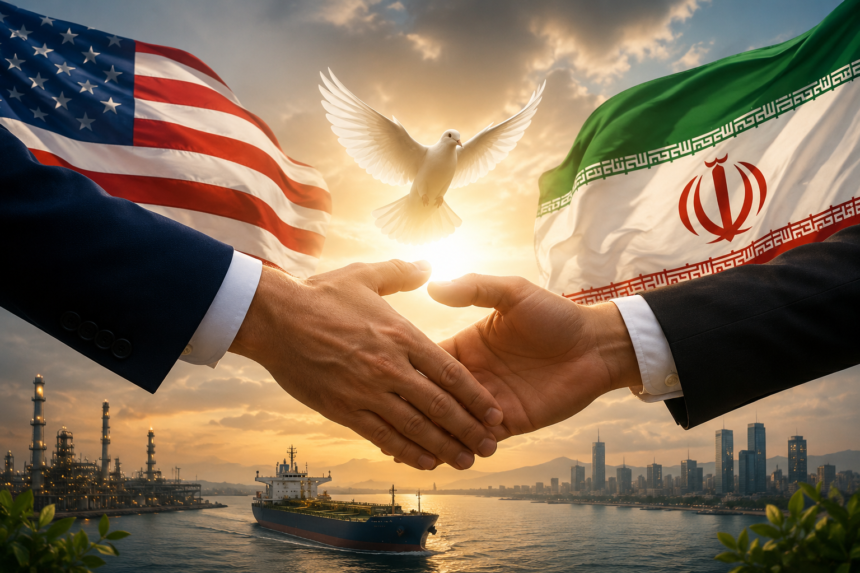
In geopolitics, peace is rarely just peace. It is also a price signal.
The proposed US–Iran peace deal, expected to open a 60-day diplomatic window, has already begun to cool global energy markets. For investors, refiners, central banks and emerging economies, the message is clear: even a temporary pause in West Asian conflict can reduce the risk premium built into oil, shipping, currencies and inflation expectations.
But the world should not mistake this for a complete settlement. This is not yet a grand bargain. It is a strategic pause — one that seeks to reopen the Strait of Hormuz, extend the ceasefire and create room for talks on Iran’s nuclear programme. The hardest part, as always, begins after the handshake.
For India, the deal matters more than most people realise.
India was not a direct participant in the war. Yet the economic impact of the conflict reached Indian households through fuel prices, freight costs, fertilizer uncertainty, rupee pressure and inflation risks. This is the uncomfortable reality of the global economy: a missile fired in West Asia can raise the cost of a vegetable basket in Chennai, Mumbai or Lucknow.
India imports the bulk of its crude oil requirements. When the Strait of Hormuz becomes unstable, India does not merely face a diplomatic concern; it faces a macroeconomic concern. Oil is not just a commodity for India. It is a transmission belt that connects global conflict to domestic inflation, the current account deficit, airline costs, logistics, manufacturing margins and household budgets.

That is why the US–Iran deal is economically significant. A stable Hormuz means smoother crude movement. Smoother crude movement means softer oil prices. Softer oil prices support the rupee, reduce pressure on the import bill and give the Reserve Bank of India greater flexibility in managing inflation and interest rates. In simple terms, peace in the Gulf can become purchasing power in India.
The second major impact is fertilizer. West Asia is not only an energy corridor; it is also a fertilizer corridor. Disruptions in urea, ammonia and sulphur supplies can directly affect India’s agriculture sector. For a country where food inflation remains politically and economically sensitive, fertilizer stability is as important as fuel stability. If the peace deal helps restore shipping confidence, it could reduce pressure on farm input costs and protect rural incomes.
The third impact is trade. West Asia is one of India’s most important commercial regions, not just for oil imports but also for exports, services, construction, logistics and remittances. Indian companies, workers and small exporters all depend on a stable Gulf economy. War narrows opportunity. Peace reopens it.
However, India should not treat this deal as a comfort blanket. The lesson from the conflict is not that India can relax when great powers negotiate. The lesson is that India must build deeper economic resilience.



New Delhi should use this window to accelerate energy diversification, expand strategic petroleum reserves, strengthen fertilizer supply chains, secure long-term LNG contracts and deepen trade corridors that bypass geopolitical chokepoints. The country must also continue investing in renewables, electric mobility and domestic manufacturing to reduce its exposure to imported volatility.
The larger point is this: India’s growth story is increasingly global, but its vulnerabilities are also global. A $5 trillion economy cannot remain indifferent to maritime security, oil chokepoints or regional wars. Economic strategy and foreign policy are now inseparable.
The US–Iran peace deal may not solve every problem. It may not permanently end mistrust. It may not immediately settle the nuclear question. But it offers markets what they value most during uncertainty — breathing space.
For India, that breathing space is valuable. It can ease inflation, support the rupee, stabilise trade and protect growth momentum.
But the real victory will not be lower oil prices for a few weeks. The real victory will be if India uses this moment to prepare for the next shock before it arrives.
Because in the new world economy, peace is not only a diplomatic outcome.
It is an economic asset.