





The New Allocation Strategy Reshaping Global Wealth Management
For decades, investors viewed gold and silver as emergency assets—financial shelters to run toward during wars, inflation spikes, or market crashes. Their role was largely defensive, offering protection when traditional assets stumbled.
But that perception is changing rapidly.
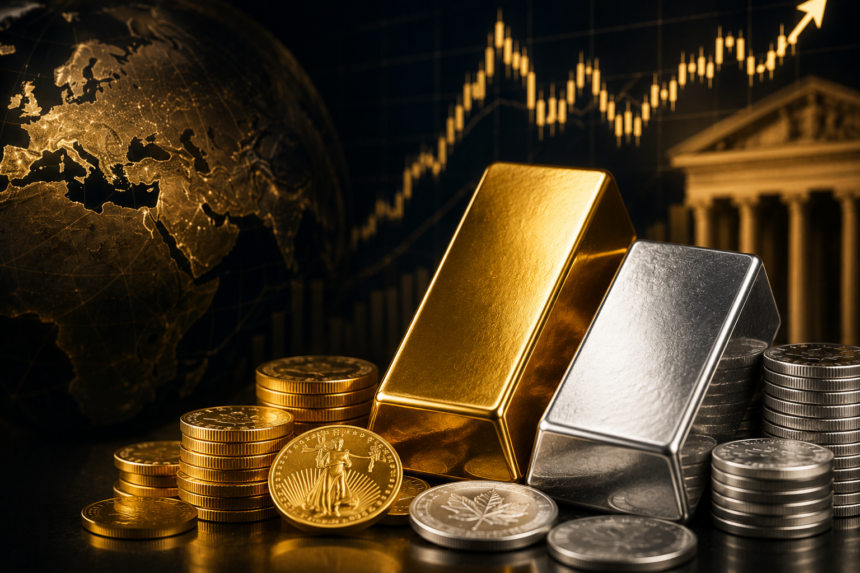
According to leading wealth managers, precious metals are evolving from tactical hedges into strategic long-term portfolio holdings. In an increasingly fragmented global economy, gold and silver are no longer simply “insurance policies” against uncertainty—they are emerging as essential building blocks for wealth preservation and growth.
A Structural Shift, Not a Temporary Trend
The renewed enthusiasm around precious metals is being driven by forces that appear structural rather than cyclical.

The first is geopolitics. From ongoing conflicts in Eastern Europe and the Middle East to growing tensions between major economic powers, investors are preparing for a world where geopolitical shocks become more frequent rather than exceptional.
Secondly, central banks around the world have become aggressive buyers of gold. Over the past few years, countries have been steadily increasing their gold reserves as they seek to diversify away from excessive dependence on the U.S. dollar. This trend reflects a broader movement toward financial sovereignty and reserve diversification.



Wealth managers argue that when central banks themselves are accumulating gold at record levels, private investors should take notice.
Gold: The Ultimate Monetary Asset
Unlike stocks or bonds, gold carries no credit risk. It is not dependent on the performance of a corporation or the fiscal health of a government. In an era where public debt levels are rising globally and monetary policies remain uncertain, gold’s unique position as a store of value becomes increasingly attractive.
Historically, gold has demonstrated its ability to preserve purchasing power during periods of inflation and currency depreciation. For long-term investors, this characteristic makes it a valuable counterbalance to traditional financial assets.
Many wealth advisors now recommend maintaining a permanent allocation to gold rather than treating it as a short-term trade.



Silver: The Industrial Metal with Investment Appeal
Silver presents an even more interesting story.
While it shares gold’s role as a precious metal and store of value, silver also benefits from strong industrial demand. It is an essential component in solar panels, electric vehicles, semiconductors, batteries, and advanced electronics.
As governments and corporations worldwide accelerate the transition toward clean energy and electrification, silver demand is expected to remain robust.
This dual identity—as both an investment asset and an industrial commodity—gives silver unique growth potential that extends beyond traditional safe-haven buying.
Portfolio Diversification in a Volatile World
Traditional portfolio construction has long relied on a mix of equities and fixed-income securities. However, recent years have shown that stocks and bonds can decline simultaneously during periods of elevated inflation and aggressive monetary tightening.
This has prompted wealth managers to rethink asset allocation models.
Many now advocate dedicating between 10% and 20% of a diversified portfolio to precious metals, depending on an investor’s risk profile and investment horizon. The objective is not merely downside protection but enhancing overall portfolio resilience and reducing volatility over the long term.
The Indian Investor’s Opportunity
For Indian investors, the case for precious metals is particularly compelling.
India has a deep cultural affinity for gold, but investment patterns are gradually shifting from physical jewellery toward financial products such as Gold ETFs, Sovereign Gold Bonds, and digital gold platforms. These instruments offer exposure without the challenges of storage, purity verification, and making charges.
Silver, meanwhile, is increasingly attracting younger investors who see it as a way to participate in the global clean-energy transition.
As India’s wealth management industry matures, advisors are encouraging investors to move beyond emotional or seasonal purchases and adopt a disciplined allocation strategy.
Looking Ahead
The global investment landscape is entering a new era marked by geopolitical uncertainty, deglobalisation, persistent inflation risks, and rapid technological transformation.
In such an environment, gold and silver are no longer merely assets investors buy when they are afraid. They are becoming strategic holdings designed to navigate an unpredictable world.
The message from wealth managers is increasingly clear: precious metals are not simply safe havens anymore—they are evolving into permanent pillars of modern portfolio construction.
For investors looking beyond short-term market cycles, the question may no longer be whether to own gold and silver, but how much of their wealth should be allocated to them.