





India should significantly expand its Strategic Petroleum Reserves (SPRs) to enhance energy security, reduce vulnerability to global supply disruptions, and support long-term economic stability, according to a recent report by global consulting firm EY.
With India importing nearly 85% of its crude oil requirements, the country remains highly exposed to geopolitical tensions, shipping disruptions, and volatile global oil prices. Expanding strategic reserves would provide a crucial buffer during emergencies while safeguarding the nation’s energy needs.
Why Strategic Oil Reserves Matter
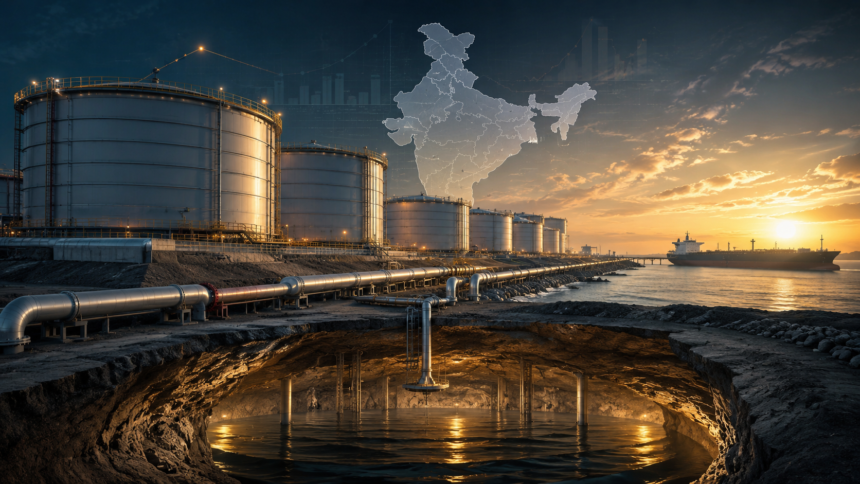
Strategic Petroleum Reserves are underground storage facilities where governments stockpile crude oil for use during supply shortages, geopolitical conflicts, or sharp spikes in international oil prices.
Countries with large strategic reserves can stabilize domestic fuel supplies and protect their economies from sudden global disruptions.
Why India Needs Larger Oil Reserves



Reducing Import Vulnerability
India is the world’s third-largest oil importer, making it heavily dependent on overseas suppliers. Any disruption caused by wars, sanctions, or shipping bottlenecks can significantly impact fuel availability and prices.
A larger reserve would provide the country with valuable time to manage supply disruptions without immediate economic shocks.
Enhancing Energy Security



Strategic reserves act as an insurance policy during crises. They ensure uninterrupted supplies for critical sectors such as transportation, power generation, manufacturing, healthcare, and defence.
Expanding storage capacity would strengthen India’s resilience against unexpected global events.
Managing Price Volatility
Global crude oil prices can fluctuate sharply due to geopolitical developments or production cuts by major oil-producing nations.
Having larger reserves allows the government to release stored crude during periods of high prices, helping moderate domestic fuel costs and reduce inflationary pressures.
Supporting Economic Stability
Stable energy supplies are essential for sustaining industrial production, logistics, and overall economic growth. Greater reserve capacity would reduce uncertainty for businesses and investors while strengthening India’s macroeconomic stability.
Current Status of India’s Strategic Reserves
India currently maintains strategic crude oil reserves at underground facilities located in:
Visakhapatnam (Andhra Pradesh)
Mangaluru (Karnataka)
Padur (Karnataka)
Additional reserve facilities are also being planned to increase the country’s storage capacity and preparedness for future emergencies.
EY’s Recommendations
According to EY, India should:
Expand strategic petroleum storage capacity significantly.
Increase public and private sector participation in reserve development.
Strengthen crude procurement strategies during periods of lower global prices.
Improve infrastructure connecting ports, refineries, and storage facilities.
Develop a long-term national energy security framework aligned with growing fuel demand.
As India’s economy continues to expand and energy demand rises, ensuring reliable access to crude oil will remain a national priority. Expanding Strategic Petroleum Reserves can help protect the country from external shocks, stabilize fuel markets, and strengthen long-term energy resilience.